
Leadership Stories Unveiled: Victoria Currey
We sat down with Victoria Currey, Founder of Two Magpies and Board Director for SeeAbility, for the latest instalment of our Leadership Stories Unveiled series.
Victoria, you began your career as a solicitor in London. What first drew you from law into leading teams and shaping how people work together?
My training as a lawyer taught me the importance of resolving conflict and building relationships so people could work together or co-exist even when approaching situations from different perspectives. That, to me, is the essence of successful HR leadership: enabling people to bring their skills and knowledge to a team and use them effectively.
Working in complex, high net worth family law disputes early in my career, I realised that negotiating the smallest details, like children’s drop-off times, allowed everyone to feel they had a win and move forward with their lives. Anchoring in these small details was essential to letting go of anger and tension from broken relationships.
I also learned a memorable lesson about respect the hard way: I was caught chewing gum in a High Court courtroom and instructed to walk to the front, remove the gum, and put it in the bin, a walk of shame I’ll never forget. It taught me that respect and proper treatment of people cannot be overlooked, no matter your place in the pecking order. I never did it again.
You’ve worked across the UK, New Zealand, Asia Pacific, and global financial services. Which city has felt most like home to you, and why?
Hong Kong stands out as my favourite city. In the UK, I’ll always feel rooted in London and Sheffield, London for work, Sheffield for my university years. Hong Kong captivated me: a melting pot of cultures, incredible food, vibrant markets, and a blend of energy with spiritual traditions. I’ll never forget seeing architecturally beautiful stairs in a head office overlooking the harbour that seemed to lead nowhere, they were feng shui stairs. That sums up Hong Kong: brilliant financial markets and sharp minds, always respectful of culture, past, and future.
Working across cultures, sometimes without speaking the language, sharpened me as a leader. For example, overseas visitors were placed in a part of the office the local team avoided because it overlooked a churchyard. Observing this taught me that leadership requires understanding why people feel the way they do and working with it. By seeing motivations like this, you can lead diverse teams through acceptance, understanding, and listening.
Looking back, if you could step into any role purely for the enjoyment of it, which one would it be?
I wouldn’t change anything really. I enjoy working with people and making a difference. If I could pick a role out of thin air, I’d probably be a writer, either a novelist or journalist.
Writing appeals to me because it requires understanding your audience and presenting a story effectively. Leadership, especially around people, is similar: you must make your case clearly and persuasively. To a board, you want concise, hard-hitting points and robust discussion. The best writers and lawyers engage you throughout a story, drawing you in, and that’s exactly what leadership is about.
Having held senior HR roles across so many regions, how has that shaped your understanding of how teams collaborate and get work done?
I’ve learnt that people are fundamentally the same worldwide, though shaped by culture. For teams to collaborate effectively, egos and personal motivations must be set aside, and everyone must commit fully. This requires determined leadership.
For example, as Head of HR in an insurance business during a restructuring, the original plan would not deliver the required profitability. The business, HR, and EXCO collaborated with McKinsey to redesign it. Hard as it was to put aside individual agendas, we did it. That business is now PE-owned and performing well. Seeing everyone align and collaborate, even under pressure showed me the power of effective leadership
Your early roles, including the Serious Fraud Office and the Eden Park redevelopment for the Rugby World Cup, were high-pressure. What did those experiences teach you about leading people through challenging situations?
The SFO was fascinating, especially during the 2008 financial crisis aftermath. I had the same dynamic CEO for both the SFO and the Rugby World Cup 2011 project. From both experiences, I learnt that leadership is key and a sense of humour is vital. Everyone involved in the Rugby World Cup project in New Zealand will know exactly what I mean.
You’ve led major change projects across multiple organisations, from outsourcing to new performance frameworks and flexible working models. What lessons stand out as most valuable?
Clarity and fairness are essential. Nobody likes bad news but being direct and respectful builds trust. Some guiding principles I follow now include:
-
Be well planned don’t act until the plan is laid out and everyone has signed off.
-
Make sure managers own the business decisions and back them.
-
Don’t be afraid to change course if something isn’t right; be honest and own any missteps.
-
Always take individual agendas into account people are often motivated by advancing themselves.
You recently completed a postgraduate diploma in people analytics. How has gaining deeper analytical skills changed the way you make decisions about people and the business?
Before studying analytics, I relied on gut feel, relationships, and management agendas. Afterward, I pause to review data first. Analytics can reveal trends and agendas, especially during change, providing a clearer picture alongside qualitative insight.
If I were setting up an HR function today, I’d build an analytics function from the start. Combining data with judgement makes you much more effective.
Alongside your legal and HR experience, you’re an accredited workplace mediator. With workplaces under more pressure than ever, how do you see mediation shaping the future of handling conflict and supporting teams?
I’ve always been interested in mediation, building on what I learned in family law and commercial arbitration. These days, it’s more important than ever, not just to reduce legal risk, but to help teams actually work together after conflict. It protects culture, keeps talent, and strengthens team capability. The key is leadership, you need someone to introduce the process and guide people, even if they’re a bit hesitant at first.
Given the challenges many organisations face today, from flexible work models to restructuring, how can mediation help leaders navigate conflict while keeping teams motivated and productive?
Mediation gives people a safe space to be honest. In the pre-meetings, people can get things off their chest, which often helps them see things from another perspective or just cope with change a bit better. When it works well, it can have a positive effect on the whole team, cut down on gossip, and make sure everyone is clear on what they’re responsible for going forward.
Across sectors like insurance, investment management, international development, government, and professional services, what patterns have you noticed in what makes teams succeed or struggle?
Teams do well when everyone focuses on being part of the team. High-performing teams put egos and personal agendas aside and work together across risk, sales, and morale to hit ambitious targets. Low-performing teams get stuck when individuals push their own agendas, blame others, and let ego drive behaviour. That creates a toxic culture, where good people leave and only those comfortable with dysfunction stick around. Leadership matters, bravely facing change while respecting people is what makes the difference, no matter the sector.
You’ve led teams through both stable periods and intense change. What approaches help you keep people focused, supported, and confident during uncertain times?
Honesty is key. People must trust that you tell them the truth respectfully. Maintain a trusted circle, avoid gossip, and create a secure environment, this directly affects decision-making and performance.
Performance and talent frameworks have been a major focus of your work. From your perspective, what genuinely helps people develop rather than just being “managed”?
I always start by understanding what someone truly wants and needs. Not everyone wants to move up the ranks or manage people, and that person can still be incredibly valuable. Some may want other forms of career development without managing others. Having a brilliant individual who can run a centre of excellence through their skills, with low ego and no desire to manage, is a gift to any organisation.
For those who do aspire to manage, it’s important to be honest about the skills and experience they’ll need to develop and to support them in that journey. Lateral moves can also broaden their skill set and perspective. If someone resists lateral development and focuses only on upward progression or pay increases, it’s worth considering if they’re the right fit. True superstars are rare and most are modest learners; in my experience, I’ve only ever met two people who were genuinely exceptional without continuing to develop their craft.
Having designed ways for teams to balance office and remote work, what makes flexible working both effective and fair?
One of the biggest gifts from Covid-19 gave us is flexible working. For anyone with a reasonable commute into London, made worse by unreliable trains, that journey can eat up a huge amount of time, impacting efficiency, health, and relationships. I do believe that spending time in person with your team is important, but simply mandating office days without purpose is a blunt instrument.
To make flexible working genuinely effective and fair, start by agreeing a plan that works for everyone. Set a “team day” when everyone comes into the office, and make that day meaningful: hold team meetings, workshops, or in-person events. Sitting at your desk on Teams calls is not a good use of time if you could join remotely. Equally, make sure everyone attends the team day. If there are repeat absences, have a conversation to understand why, and if needed, review whether their role could be fully remote. The key is trust, fairness, and purpose, flexible working only works when it respects both individual needs and the team’s objectives.
After working across so many sectors, which leadership qualities do you think are essential no matter the industry or location, and is there a career moment you’re particularly proud of?
The qualities I value most in any leader are loyalty to their team, honesty, and inclusivity. I’ve been fortunate to work with exceptional leaders across many sectors. I particularly enjoyed my time in insurance, a relationship-driven business, where the calibre of leadership I observed was outstanding and continues to inspire me.
One standout moment in my career was being part of the team that prepared Eden Park for the Rugby World Cup final in 2011. Watching New Zealand play France in a nail-biting final, knowing I had contributed to delivering a world-class stadium, was truly a once-in-a-lifetime experience. It reinforced for me the power of collaboration, careful planning, and shared commitment in achieving something remarkable.
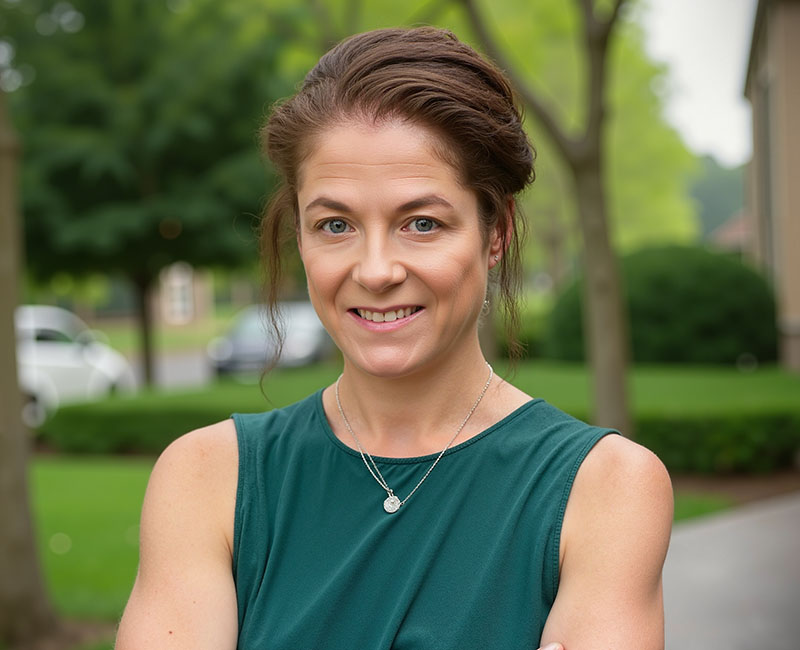 Victoria is a qualified UK lawyer and accredited workplace mediator, and a results-oriented Human Resources Director and Employee Relations expert. She has a strong track record of resolving complex workplace conflicts through high-quality, outcome-driven negotiations and mediations. She specialises in transforming HR teams and business units using data-led insights, and brings deep expertise in HR Business Partnering, Talent Management, and HR Operations.
Her experience spans the UK, EMEA, the US, and the Asia Pacific, giving her a strong global perspective on HR best practice. Victoria partners effectively with senior leaders to achieve strategic objectives, lead transformation and growth programmes, and coordinate global employment relations matters. She consistently delivers high stakeholder satisfaction and measurable business impact.
Highly skilled in leading and developing high-performing teams, Victoria excels in building capability, improving operational performance, and exceeding KPIs. She has extensive experience in TUPE, redundancy, and redeployment programmes, and in managing complex employee relations issues with credibility, fairness, and commercial insight.