
Leadership Stories Unveiled: Debbie Ryan
We sat down with Debbie Ryan, Strategic HR Director, Non-Executive Director, and Leadership Coach, for the latest instalment of our Leadership Stories Unveiled series.
Debbie, looking back, what first drew you to a career in HR and leadership, and what has kept you passionate about it over the years? How has your motivation evolved as you’ve moved through different industries and roles?
My dad ran his own industrial painting business; one of his contracts was the steelwork above your head at St Pancras Station. When I was about 16, he was winning work because of the quality of his people, often replacing contractors who had failed to deliver. He always said, “I’m only as good as the men I have on site.” That sparked my curiosity about how he found the right team, how he motivated them to perform even when he wasn’t there, and why he paid a little extra to keep good people.
It inspired me to study Business Studies with a specialism in HR while working at John Lewis on Saturdays. By the time I started my first HR role, the principle of having the right people in the right roles, with the right leaders, doing the right things today and tomorrow, was part of my DNA.
I’ve always been driven by how HR can maximise workforce value to achieve business goals. Over time, my motivation has expanded to include creating environments where everyone can have a great day at work every day, because that, in turn, fuels business success.
I’ve thrived in organisations where I can bring that to life, using data and insight to identify people issues and solve them. For example, in one business, we excelled at winning new customers but struggled to retain them. By analysing performance data, objectives, and capability, we discovered our managers lacked training, and our employee turnover was high. We implemented a 12-week plan to develop our managers, support retention, and strengthen customer relationships. Within months, our customer retention rates surpassed competitors.
Given your response, what do you make of the noise around HR’s role and value within an organisation?
It’s disappointing as there is so much evidence to prove the value HR can bring to an organisation. There are great leaders and organisations who recognise this and give HR leaders the mandate to add value; unfortunately, there are also leaders and organisations who fail to accept the contribution which can be made and downgrade the talent and resources within HR. I’ve been blessed to work with leaders who have given me that scope, and unfortunate to work with ones who haven’t. They have normally been in organisations where performance and productivity are lower than expected because the workforce’s potential hasn’t been realised.
Who or what has had the biggest influence on your leadership style?
My leadership style has evolved over my career. Sometimes through failing, sometimes through great development programmes, and sometimes through observing others and analysing how they do what they do, and then developing my own similar skillset. Additionally, two books helped me to evolve my style. The first time I read ‘First Break All The Rules’ by Marcus Buckingham, I wanted to be managed by the leadership style they were advocating, which encouraged me to lead in the same way. The second key book was by Daniel Goleman, Richard Boyatzis, and Annie McKee called ‘The New Leaders. Transforming the Art of Leadership into the Science of Results.’ It described six leadership styles and advocate a choice depending on the circumstances. I read it while I was becoming accredited to deliver Insights Discovery workshops, and the two combined helped me develop a more adaptable and agile style of leadership.
If you had to describe your leadership style in 3 words, what would they be, and how do those words play out in your day-to-day leadership?
Visionary and curiosity driven. I am focused on what can be and need to achieve – once we know what we are trying to achieve, and seek collaboratively to determine how, who, will, when, etc.
You’ve worked across a wide range of organisations and industries; what project or transformation stands out as the most defining moment of your career so far? What made it so pivotal, and what did it teach you about yourself as a leader?
I’ve been privileged to join organisations at turning points in their history: helping a college become a university, supporting Northern Rock’s turnaround, driving growth at TD Synnex, and leading transformation at HomeServe after an FCA fine. But the most defining was my four years at Carphone Warehouse.
I partnered with the CTO to overhaul an IT function that couldn’t support the company’s ambitious expansion plans. Turnover was high, recruitment was tough, and capability needed rebuilding. Leading the people workstream, we transformed how we led, managed, and rewarded our teams, operating outside the usual retail HR framework.
One bold move was convincing the Remuneration Committee to reallocate LTIPs from senior leaders who were exiting to key IT architects who would deliver the change. We redesigned performance management around measurable goals, building a culture of clarity, accountability, and high support. It wasn’t about harshness but about helping everyone understand what success looked like and how to achieve it.
The experience taught me the value of trusting my judgement and backing potential. I built a relatively inexperienced team, most just a few years post-qualification, because they had the capability and drive to grow.
Many are now senior HR leaders. That period remains one of my proudest career highlights, alongside my work at HomeServe.
You often talk about people being at the heart of business performance. What does that look like in practice for you? Can you share a time when putting people first directly drove better business outcomes?
HomeServe is a strong example. I joined during an FSA-mandated transformation following a major fine for mis-selling insurance. My role was to support the new People Director, whose background was in customer service, in embedding a people-first approach.
We believed the employee experience should mirror the customer experience, so my title became People Experience Director. We worked with the Customer Experience Director to map and design employee journeys using the same principles applied to customers.
Under new leadership, the business made bold choices. The Finance Director became Managing Director and completed a three-month development plan away from the business to reset culture and leadership style. Each morning, open forums were held where employees could raise customer issues that policy didn’t adequately address. Decisions were made on the spot and lessons fed forward to improve processes.
Engineers often identified vulnerable customers and quietly mobilised our volunteer network to help. These acts were never promoted but reinforced a culture of care and accountability. Putting people first built trust, accelerated change, and directly improved both customer satisfaction and business performance.
How do you approach building high-performing teams in times of uncertainty or change? What do you think makes the difference between teams that thrive and those that struggle?
It depends on the circumstances, as sometimes when you take on a new role, there is already a good team in place. This requires analysing why it works, and will it continue to do so in the circumstances the organisation finds itself in for the here and now, and longer term. Sometimes, also joining an established team is an opportunity to move things around, to offer individuals within the team development opportunities to bring an element of striving for something new or different for themselves as well as the team and the organisation. The other circumstances are when, for whatever reasons, the team needs a refresh. I tend to approach building the team from two perspectives; what do we need to do and how do we need to do it, etc., and then who are the people who will thrive in making it happen because they have high levels of learning agility and grit, they bring something to the team dynamic and there’s something about the opportunity that’s a stretch for them.
The next phase is gaining clarity while accepting that things may change as there’s uncertainty, which means we’ll work on circa 100-day plans. This helps create a pace and a sense of progress, while building an ethos, we’ll only succeed together. Additionally, there’s also an element of let’s demonstrate what a great team can do for an organisation.
Having worked in so many transformation roles, what do you see as the critical ingredient for embedding cultural change? And how do you make sure that change truly sticks rather than slipping back into old ways?
Rarely is there a single ingredient, as several factors are at play, yet if leaders aren’t living the culture, then the chances of culture change diminish, because it is hard to justify why everyone else must do things differently.
Every leader faces setbacks. What’s been one of your toughest challenges, and how did you navigate it? Looking back, what strengths did you uncover in yourself during that time?
There’s been a few! I’ll share one early in my career when I was working as the Head of HR for Europe of an American-owned software sales business.
One day, the Payroll Manager spoke to me to say the VP of Europe had instructed them to increase their pay, and they were being insistent that it went into the payroll run now. The Payroll Manager hadn’t been sent any authorisation to do so by the manager of the VP of Europe or my manager, the VP of HR. They were uncomfortable making the change without any – rightly so.
With time differences a factor, availability of the key leaders in the USA, and believing it would be better to have a conversation with the VP of Europe directly, I spoke to them to ‘discover more’, to ask if they had any confirmation of the pay increase. During the interaction which followed, the VP physically shook with rage because we were asking for confirmation, an explanation of consequences for me if we didn’t make the change, etc. I did subsequently receive authority to make the pay increase, yet the damage to the relationship had been done.
Looking back, it showed me I had the courage and integrity to stand up in tough situations, even if the outcome for me was potentially losing my job. It also taught me in ‘stand-alone’ roles, it is challenging to navigate situations when you are not aware of a wider context. The VP of Europe had negotiated a promotion and higher salary, yet it was confidential.
Finally, it also taught me sometimes we find ourselves in difficult situations which aren’t of our making, and in those moments it’s best to stay true to your own beliefs and values, otherwise you’re betraying yourself.
What has surprised you most about your own leadership journey?
Some of the surprises, which as I write them here shouldn’t be that surprising. For example, no two situations, organisations, etc. are the same, the individuals involved have different agendas. For example, I was on my 3rd implementation of introducing a benefits platform and in the third organisations, the amount of resistance was huge. The first two implementations in two separate organisations had been welcomed; the second one had been award-winning.
Another surprise is we are all grappling with how to flex our leadership style while being authentic, while juggling lots of demands. Being well-organised isn’t enough. Being purposeful, team-orientated isn’t enough. As I have become more experienced and discovered this Maya Angelou quote: “I belong everywhere as long as no matter where I go or who I am with I never betray myself”. Connecting and building relationships is key to building a successful career and life; it should never come at the expense of compromising who you are or the person you are becoming.
The other surprise is not recognising in the moment how well I was doing or the impact my leadership qualities were having. I remember being back home with my parents for a few weeks while my home was being renovated. I was applying for roles, and my dad read my CV. He had an old-world view of HR – ‘tea and sympathy’ and dealing with ‘people’s problems all day’. After reading my CV, he said, ‘wow, you’ve done all that, and made that difference’.
What continues to inspire and motivate you in your work today? Where do you still find your energy and sense of purpose after such a broad and impactful career?
I continue to be inspired by the potential of what can be done if there is a bunch of great people who want to make a difference, who strive to remove barriers and find a way to achieve the end goal.
Outside of work, what helps you switch off, recharge, or find balance? Do you have routines, hobbies, or practices that keep you grounded?
I am passionate about sport, and the difference it can make to the lives of others, in particular women and girls. I am a netballer – I play, coach, umpire, mentor umpires and help run a club. This means I must put the effort into fitness, strength and conditioning to be able to compete and avoid injuries. I have also become Chair of the Trustees for one of the largest youth football clubs in England, which has 1300 members, 100 teams and one of the largest inclusive sections too. (I also served on the England Netball Board as a Non-Executive for 8 years). I am a perpetual learning, and love working out how I can learn to make the things I do better and how I can make a difference.
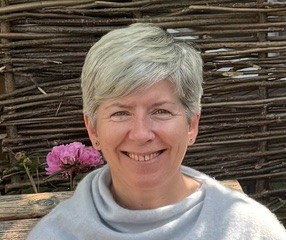 Debbie Ryan is a strategic HR Director, Non-Executive Director, and now leadership coach with a career defined by clarity, integrity, and impact. She has held senior roles across multiple sectors and geographies, often joining organisations at critical inflexion points, whether during business and cultural transformations, turnarounds and delivering exponential growth.
Debbie’s expertise spans the full people agenda with a focus on maximising the value of the workforce while ensuring a culture where employees can succeed, grow and thrive. As a Non-Executive Director, she brings independent challenge, cultural insight, and strategic clarity to boards navigating complexity and change.
She is passionate about sport and the difference it can make to people’s lives, especially for women and girls. She is now the Chair of one of the largest youth football Clubs in England, in addition to her grassroots roles in netball. Additionally, she is a mentor for Sport England’s funded Leading the Movement, which supports leaders to confidently and successfully drive the change needed to tackle inequalities in sport and physical activity.