
Leadership Stories Unveiled: Hazel Mallett
We sat down with Hazel Mallett, HR Leader, for the latest instalment of our Leadership Stories Unveiled series.
With a career spanning professional services, engineering, retail, finance, manufacturing and beyond, Hazel Mallett has built a reputation as an HR leader who helps organisations translate business ambition into people strategy. Her experience is defined not just by breadth, but by depth having worked independently, internationally, and at scale to design talent, leadership, and performance approaches that unlock commercial outcomes.
In this interview, Hazel reflects on the defining moments, motivations and principles that shape her leadership today.
Hazel, what first sparked your interest in HR, and when did you know it was the right career for you?
My interest in HR started surprisingly early. A teacher at school once told me, “If I hadn’t gone into teaching, I would have chosen Personnel.” It stuck with me. Later, during a university placement in France, a family friend working in Personnel helped me secure my work experience, and that really reinforced the appeal.
After graduating, I found myself torn between an administrative role at CERN or beginning a long-term HR career. As exciting as CERN sounded, HR won. My early roles were administrative, but they gave me crucial grounding while I studied for my CIPD in the evenings.
The moment it all “clicked” was at Capita. That was where I first experienced real autonomy, complexity, independence and room for judgement. It shaped the strategic HR leader I would later become.
You’ve mentioned a pivotal moment at Spirax. What was it that changed the way you lead?
Spirax introduced a new talent framework that included the idea of followership. At first, it just seemed like an interesting addition. I didn’t realise how foundational it would become to my HR approach.
It prompted me to shift from thinking about what leaders say to what people genuinely choose to follow. That’s influenced how I coach leaders when they’re asking teams to adjust working patterns, change roles, or pursue promotions.
I always encourage leaders to examine the environment they’re creating:
- Are people connected to the purpose?
- Do they understand the “why”?
- Do they trust the leader?
- What behaviour is being role‑modelled?
People don’t follow positions — they follow people. That’s where HR adds real value.
You’ve worked across very different sectors. How have you adapted your style to build effective, business‑aligned talent strategies?
Working across so many industries has been a real advantage. Effective HR leadership isn’t about memorising the specific quirks of one sector, it’s about understanding people, culture, performance and organisational dynamics.
I adapt my style to the context, but remain anchored in:
- strong judgement
- strategic thinking
- commercial alignment
- pragmatic execution
That’s how I help businesses achieve their strategy: by ensuring that their talent strategy is right, scalable, and genuinely aligned to commercial needs.
Can you share a time when your HR approach directly improved business performance?
My years at Capita were hugely developmental — working independently on complex issues, supporting international expansion, and strengthening my own judgement.
At AFRY, we reduced reliance on external advisers, which meant:
- lower external spend
- quicker decisions
- solutions that genuinely matched the business need
Another example was calibrating performance ratings across consultant grades and aligning them with global talent processes. We put governance and challenge mechanisms in place to ensure fairness and consistency. It’s a great illustration of how earlier experiences compound into later impact.
What would you say is your proudest career achievement?
Without doubt, it’s seeing the people I’ve hired, managed or developed go on to thrive. There are too many examples to name, but each one means something.
Many of them remain in my network and continue to support me. That long‑term connection is incredibly meaningful — it shows the lasting impact of investing in people.
If you could change one thing about how organisations attract or retain talent, what would it be?
If I could change just one thing about how organisations attract and retain talent, it would be the way we communicate with candidates start to finish.
Speaking both as someone who’s been job searching recently and as an HR Director who’s built a lot of talent pipelines, I can’t stress enough how much simple, human communication matters. When candidates feel acknowledged, they stay engaged. When they feel ignored, they switch off and that has a ripple effect on how they see a company.
From my own job‑seeking experience, more than 51% of my applications never received a response. What surprised me most was that this wasn’t just direct applications 56% of the silence came via agencies and 44% directly from employers. It really highlighted for me how big the opportunity is.
A quick update, a short note, even an automated message that feels thoughtful — it all builds trust. And from an HR perspective, that kind of trust is gold. It strengthens your employer brand, keeps talent warm, and shows future employees that communication isn’t just a value written on the wall, it’s a lived behaviour.
If every organisation made candidate communication a priority, not only would jobseekers feel more valued, but we’d also build healthier, more engaged talent pipelines that pay off in the long term.
Outside of work, are there personal experiences that influence how you lead?
Yes, one moment stands out. When I partnered with the CFO at Capita, we were trying to attract more women into finance roles. I realised I couldn’t hire more women if they simply weren’t coming through the pipeline.
It sparked a desire to contribute earlier in the journey, helping create opportunities, confidence and representation for women and girls.
Volunteering has always been part of my life. I became a primary school governor for that reason, and now, as a community centre trustee, I’m keen to find a role more directly aligned with supporting women into the workforce, something like Smart Works or the Women’s Work Hub.
And finally, what keeps you motivated as a leader?
Feeling that the work I’m doing really matters. I don’t need praise, but I value knowing the contribution is noticed and making a difference to people, to culture, and to the business.
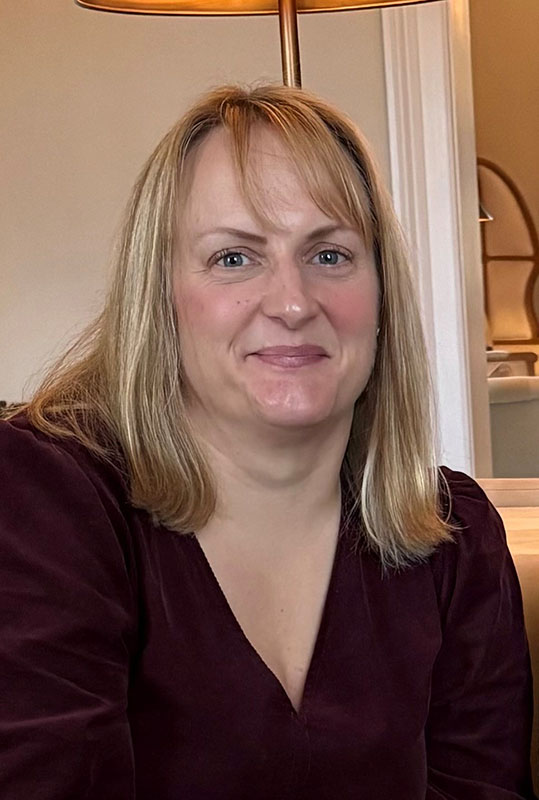 A Leadership Voice Built on Experience, Judgement and Influence
Across every sector she’s worked in, Hazel has stayed firmly focused on one purpose: helping organisations achieve their strategy by ensuring their talent strategy is right. Her leadership is thoughtful, grounded, and deeply human, shaped by experience, strengthened by judgement, and driven by a commitment to helping people and organisations thrive.