
Leadership Stories Unveiled: Andy Scott
We sat down with Andy Scott, Head of HR at Darchem Engineering, for the latest instalment of our Leadership Stories Unveiled series.
Andy, what first sparked your interest in HR, and when did you know it was the right career for you?
My interest in HR really stems back to my time at school. I was never particularly academic, and that became especially clear when my GCSE results arrived. At the time, opening that brown envelope felt disappointing, but looking back, it was probably the best thing that could have happened to me.
Up until then, I had simply followed the traditional academic path and, had my results allowed, I would have continued down the same route into sixth form. Instead, I had to take a different direction. I still wanted to attend sixth form, but the only option available to me was an NVQ in Business Studies, a course often seen as the alternative route for students with lower grades. That decision changed everything for me.
For the first time, I was learning in a way that connected directly to real-world situations, and it completely transformed my attitude towards education. Within a year, I went from being at the bottom of the class to the top. Within three years, my coursework was being used as an exemplar for future students following the same pathway. That success gave me the confidence and opportunity to progress onto a Business Studies degree, where my academic performance was far stronger than anyone, including me, might have predicted just a few years earlier.
My university offered sandwich degrees, which involved taking a year-long industry placement between the second and third year of study. I secured a placement with a catalyst company and spent 12 months working within their HR team. Although I initially felt like a fish out of water adapting to a professional office environment, that experience ultimately confirmed that I had found the right career path for me.
I’ve worked in HR ever since.
You’ve led teams through extreme volatility across aerospace, defence and nuclear. What have those environments taught you about workforce agility and people resilience?
Without doubt, the biggest lesson came during COVID.
One moment, the virus was something we were hearing about on the news; the next, the world had effectively shut down overnight. For a business heavily involved in aerospace, the impact was immediate and significant. Flights were grounded, holidays were cancelled, airlines stopped ordering parts, and what had been thriving factories suddenly faced a dramatic reduction in demand.
Fortunately, one of our greatest strengths as a business was the diversity of our capabilities. While aerospace was severely affected, we were also heavily involved in a major national nuclear infrastructure programme, specifically the construction of a new nuclear power station. As the project was deemed critical to the UK’s energy security, much of the work continued throughout the pandemic and many of the workforce were classified as essential workers.
That gave us the flexibility to redeploy a large number of employees onto workstreams supporting the nuclear programme, which ultimately allowed us to retain a significant proportion of our highly skilled workforce during an incredibly uncertain period.
That decision proved invaluable when the world reopened.
Industry experts initially predicted that air travel would not return to pre-COVID levels until 2025, but in reality the recovery happened almost two years earlier than expected. Almost overnight, planes were back in the skies and the entire travel industry was caught off guard. News coverage was dominated by stories of six-hour airport queues, labour shortages and operational disruption across airlines and hospitality.
Because we had protected and retained our skilled workforce, we were able to respond quickly. Had we lost those capabilities during the downturn, recovering at pace would have been extremely difficult.
For me, that period reinforced a critical lesson about workforce agility and resilience: organisations that invest in retaining, adapting and supporting their people during periods of uncertainty are far better positioned to recover and grow when conditions improve.
Succession planning is clearly a core value for you and for the business. Why do you believe internal progression is so critical, especially in highly regulated industries?
Succession planning is part of the DNA at Darchem. I’m personally a product of internal progression myself, so I have a great deal to be grateful for. Across the business, we have countless examples of people developing and progressing through the organisation, which is something we are incredibly proud of. In fact, our current VP of Operations, who is on the succession pathway to become President, first joined the business during a school work experience placement.
There are many reasons why internal progression is so important, and operating within highly regulated industries is certainly one of them. Aerospace and nuclear environments are regulated to the highest standards for good reason; product failure in these sectors can have unimaginable consequences. Having managers and leaders who have grown within the business means that the importance of quality, compliance and regulation has been embedded throughout their entire professional development. As a result, there is a deep-rooted understanding of expectations, exceptional standards, and very little ambiguity around what good looks like.
Beyond regulation, though, our track record of promoting from within creates a culture where people genuinely believe they have a future and a career path within the organisation. That is incredibly powerful. It motivates people to continually develop themselves, contribute at a high level, and strive to deliver the best possible service to our customers.
The reality is that talent does not grow on trees, and we see that whenever we recruit externally. We are never simply hiring someone to fill an immediate vacancy; we are looking for individuals who have the capability, ambition and mindset to become part of our long-term succession pipeline and continue progressing within the business. Finding people with that potential is not impossible, but it is rarely easy.
Finally, because we invest so heavily in developing our people, competitors will inevitably try to attract that talent away from us. On the occasions where they are successful, having a strong succession pipeline ensures we have capable people ready to step into key roles, minimising disruption both to the business and to our customers.
You introduced genuine flexibility, including a four‑day week, in a manufacturing environment where that’s rarely seen. How did you gain executive buy‑in, and what evidence proved it was the right move?
This is something that comes up a lot, and it’s not uncommon for other industry leaders to ask how we managed to make it work in a manufacturing environment.
In reality, the key to gaining executive buy-in was taking a planned, gradual and evidence-led approach. We never tried to make a radical overnight change. Instead, we built an integration plan that included regular review points, clear measures of success, and importantly, “off-ramps” if the data suggested it wasn’t working.
We started small by introducing flexible working on a trial basis. From the outset, we were transparent with our people and made it clear that this was an opportunity to test whether greater flexibility could work within our business and, if so, what the right model might look like.
The initial trial proved successful, so over a period of months we gradually expanded the flexibility available. One of the key developments was the removal of core hours on Fridays, which effectively allowed many employees to benefit from a four-day working week.
Throughout the process, we closely monitored key operational metrics including on-time delivery, quality performance, absence levels and overall productivity. The data consistently showed that we could continue operating effectively while also delivering meaningful benefits for our workforce.
Over time, the evidence became undeniable. Absence levels reduced significantly, employee turnover dropped, and engagement improved considerably. In our most recent employee survey, workplace flexibility was identified as one of the best things about working at Darchem.
Rather than rigid policies, you’ve taken a “true flexibility” approach, tailored cell by cell. What impact has that had on engagement, retention, and productivity?
That’s absolutely right. While, in an ideal world, a one-size-fits-all approach would bring simplicity and consistency, the reality within manufacturing is that it just isn’t always possible.
We quickly realised that if we insisted on applying the exact same model across every role and every area of the business, we would likely end up with no flexibility at all. Instead, we had to accept that flexibility naturally lends itself more easily to some roles than others, and importantly, we needed to be honest and transparent with our people about that.
Our approach therefore became one of “true flexibility” tailoring arrangements to individual teams, cells and operational requirements rather than forcing a rigid policy across the organisation.
Initially, we did have concerns that this more fluid approach could negatively impact engagement, particularly if employees compared their flexibility to that of others in different roles. However, in practice, the opposite happened.
The impact has been overwhelmingly positive. We have seen significant reductions in both employee turnover and absence levels, and in our most recent employee survey, flexibility was identified as the best thing about working at Darchem.
Perhaps most importantly, people openly tell us that in the past they would regularly look at opportunities elsewhere, whereas now they are far less inclined to do so.
You’ve spoken about measuring quality over volume, and outputs over presence. How does that mindset change how leaders manage and trust their people?
Darchem has always been a data-driven business. We are not a high-volume manufacturer of repeat parts; we specialise in highly engineered products for a critical customer base where quality, compliance and customer service matter far more than parts per minute.
That context fundamentally shapes how we think about performance and leadership. Success is measured by the quality of outputs, delivery performance and customer satisfaction.
A key part of making that shift work has been involving leaders at every level in the design and implementation of change. When we introduced flexible working, for example, our leadership team was actively involved in the consultation and trial phases from the outset. They weren’t just informed of the change they helped shape it. That involvement made a significant difference. It meant leaders understood the rationale, had visibility of the data, and had ownership of the outcomes. As a result, they were able to manage the transition effectively rather than feeling that change was being imposed on them.
Your own journey — from leaving school with GCSEs to senior leadership challenges traditional views of career pathways. How does that influence how you spot and develop talent today?
It’s true, I left school with very few qualifications. Today, however, I hold both a degree and a master’s, and I’m a Chartered Fellow of the CIPD. That journey has shaped my perspective significantly.
School is important, but it doesn’t define your future at 16, nor does it determine your long-term potential. For me, real progress came when I found something I was genuinely interested in. I was never particularly engaged by subjects like the periodic table or Shakespeare, but once I was able to apply theoretical learning to real-world business contexts, everything changed. My grades improved dramatically, I went from a D to an A simply because I was engaged and could see the relevance of what I was learning.
That’s not to diminish those who excel in academic or scientific disciplines; they are incredibly talented. It just wasn’t the right fit for me at that time.
That experience has had a lasting impact on how I view talent development today. Developing people is something I feel very strongly about, both within the business and externally. Alongside my role at Darchem, I also mentor emerging HR professionals through the CIPD Trust. I’ve found that many people’s journeys are not so different from my own, they experience setbacks or take alternative routes and begin to question whether they can truly reach their potential. I’ve experienced imposter syndrome throughout my career, and I see it regularly in others as well. While the reasons may differ, the outcome is often the same: highly capable people who underestimate what they are capable of. My role is to help unlock that potential and give people the confidence to see the value they bring.
When it comes to spotting talent, I focus far less on traditional traits and far more on attitude, curiosity, and a genuine willingness to learn. One example that stands out is a current HR Business Partner who originally joined us as temporary administrative cover four years ago. Today, she is on the succession plan for my role. She is completing her Master’s in HRM, undertaking CIPD Level 7, and is already responsible for HR at our operation at Hinkley Point C, which is considered by many as Europe’s largest nuclear new build project.
All I did in that case was recognise potential, create opportunities, and open doors. She did the rest. And the journey is still very much ongoing.
What are you most proud of from a people leadership perspective, and what legacy do you hope to leave for the next generation of leaders?
From a people leadership perspective, what I’m most proud of is helping to evolve the business from a traditionally structured, manufacturing-led organisation into one that is more progressive in how it thinks about people, performance, and flexibility.
It’s important to say that the business has always had very solid leadership and a strong values base. None of what we’ve achieved in recent years would have been possible without that foundation. What we’ve done more recently is build on it and adapt it for a changing world of work.
A big part of that has been shifting the mindset from more traditional approaches to one that is increasingly focused on trust, outputs, and accountability. Introducing greater flexibility, investing heavily in internal development, and embedding succession planning more deeply into the organisation are all part of that journey.
We have created a stronger focus on internal progression and visible career pathways. People can now genuinely see how they can grow within the organisation, and that has had a direct impact on engagement, retention, and capability building.
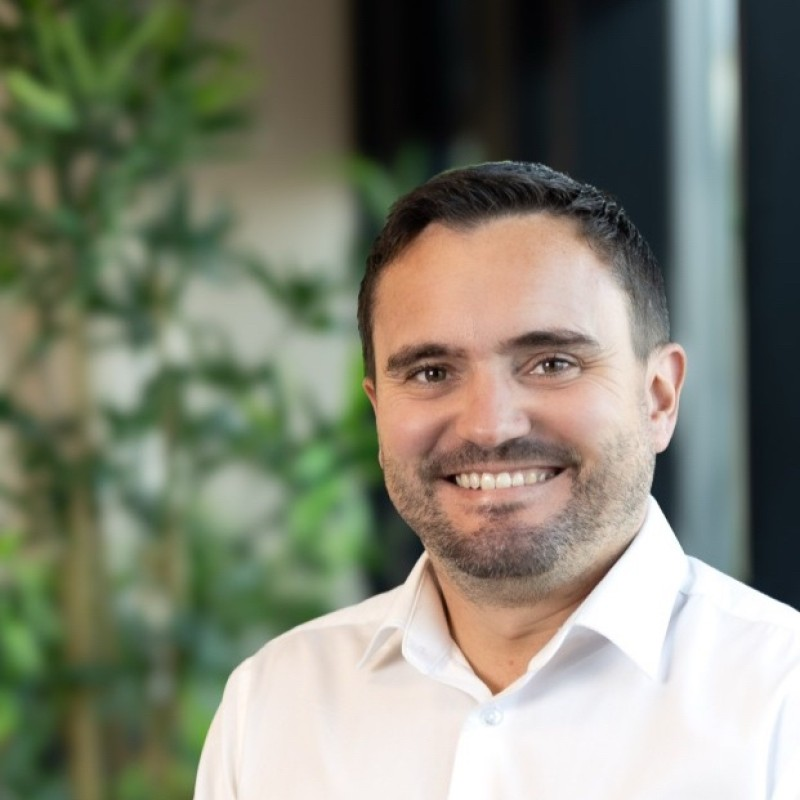 About Andy
Andy is a Chartered Fellow of the CIPD with over 15 years’ HR experience, including five years at executive leadership level. Holding both an MSc and BSc in Human Resource Management, he is also an official CIPD mentor, supporting students and professionals through their own HR journey. His expertise spans the full employee lifecycle, including recruitment, employee relations, TUPE, redundancy, organisational design, and strategic workforce planning.
Andy has worked across highly regulated industries including aerospace, marine, nuclear, and motorsport, covering both commercial and defence sectors. He currently leads a team of HR Business Partners and is passionate about developing people-focused strategies that support business growth and resilience.