
Leadership Stories Unveiled: Andrea Sanchez
We sat down with Andrea Sanchez, Chief People Officer, for the latest instalment of our Leadership Stories Unveiled series.
When people look at your career on paper, they see scale, complexity, and longevity. How do you describe your journey in your own words, and what threads have remained constant throughout it?
On paper, my career looks like scale and longevity. In reality, it’s been shaped by moments when the business needed to change – and I was trusted to lead that change through people.
I’ve worked in complexity and ambiguity throughout my career: growth, acquisitions, transformation, and crisis. What’s stayed constant is my belief that people strategy isn’t a support function; it’s a commercial lever. When organisations falter, I believe it’s rarely due to a lack of ambition – more often, clarity, capability, or culture are out of sync.
Longevity was never about staying comfortable. It was about earning the right to tackle harder problems, build what didn’t yet exist, and support leaders when the pressure was highest. I’m drawn to environments where decisions matter, change is real, and leadership is tested.
The thread running through my career is simple: rigour with humanity. Sustainable performance doesn’t come from structures alone – it comes from people who feel trusted, challenged, and genuinely enabled to do their best work.
You have spent much of your career working across regions, cultures, and time zones. What has working at that level taught you about people that you simply could not have learned in a single-market role?
Leading teams across EMEA, APAC, and the Americas showed me that employees’ experience of an organisation is never uniform, even within the same company. That reality became most visible during large-scale transformation and M&A, where the same change can feel like opportunity in one market and threat in another.
Success didn’t come from perfect frameworks, but from listening hard, understanding local context, and adapting delivery without losing strategic intent. Living and working internationally reshaped how I lead: when you operate across time zones and cultures, authority doesn’t come from proximity or title, it comes from trust.
Credibility is built through consistency, transparency, and empathy, especially when decisions are difficult. A single-market role teaches execution; global leadership teaches humility. It sharpens judgement, challenges assumptions, and leaves nowhere to hide behind theory.
Above all, it reinforced my belief that high performance at scale is only possible when people feel seen, respected, and understood, wherever they sit in the organisation.
The Chief People Officer role looks very different today than it did even a decade ago. From where you sit, what has fundamentally changed, and what has remained surprisingly constant?
The Chief People Officer role has moved well beyond traditional HR management. It is now a strategic position responsible for building the organisational capability required for sustainable growth. Today’s CPO operates at the intersection of strategy, technology, culture and ethics – a breadth of remit that simply didn’t exist ten years ago.
What’s fundamentally changed is the leverage. Digital platforms, people data, and AI give unprecedented insight into capability, performance, and potential, if we’re brave enough to use them well. The opportunity isn’t automation for efficiency’s sake; it’s using technology to make better decisions, reduce bias, personalise development, and design work around how humans perform best. People strategy can now be predictive, not just reactive.
What hasn’t changed is the human core of the role. In moments of uncertainty – acquisitions, restructures, crises, or transformation – leaders still look to the CPO to create clarity, hold tension, and anchor decisions in values. Trust, judgement, and moral courage remain irreplaceable.
The most impactful CPOs will combine digital fluency with deep human insight, using AI to elevate leadership, not replace it. While the tools have evolved, the mandate hasn’t: build organisations where people can perform, adapt, and thrive.
You have spoken about translating people data into insight. How did your interest in data develop, and what do you think leaders still get wrong when they try to use data to understand their workforce?
My interest in people data didn’t start with dashboards; it started with frustration. Too many critical people decisions were driven by instinct, anecdote, or the loudest voice in the room. Data became a way to challenge assumptions and create a shared, objective basis for better decisions, but only when grounded in the stories behind the numbers.
That insight sharpened when we launched our first global engagement survey. The value wasn’t the scores; it was the signals. Engagement data is not a solution, it’s a prompt. Without context, numbers oversimplify lived experience, and moving straight from results to action plans is where many leaders lose impact.
Real insight came from slowing down: using the data to spot patterns, then taking those themes back to employees to understand the “why.” That dialogue turned insight into focus and enabled us to address the issues that truly mattered, co-creating solutions that were commercially relevant, credible, and owned by the business – not imposed by HR.
What continues to surprise me is how often data is either over-engineered or under-used. HR doesn’t need more data; it needs better intelligence and a compelling narrative. Our role is to turn insight into action and action into sustained change. Done well, people data brings leaders closer to their workforce – combining evidence with empathy to drive clarity, accountability, and trust.
Rolling out a global HR system across dozens of markets is as much about people as technology. What surprised you most during that journey, and what lessons have stayed with you since?
What struck me most during the Workday rollout wasn’t the technology – it was how much the platform challenged established ways of working. The toughest questions came not from the business, but from well-intentioned habits and local processes that had grown over time.
Implementing a global platform highlighted an important truth: HR has immense expertise, but scale and complexity can sometimes make it harder to see which processes truly drive value. Standardisation isn’t about control – it’s about asking sharper questions: does this genuinely benefit employees, and does it help the business perform better?
The lesson was clear: digital transformation is a mirror. Platforms like Workday don’t just automate work – they reveal opportunities to simplify, improve consistency, and focus on outcomes. Success came from redesigning work thoughtfully, not replicating old processes.
What stayed with me is this: technology doesn’t make HR strategic, but it removes barriers and frees the team to act as enablers – using insight, time, and energy to focus on what truly drives business performance.
You have led through some of the most challenging conditions, including large-scale acquisitions and the pandemic. What did those periods reveal to you about leadership, both in others and in yourself?
Leading through large-scale acquisitions and the pandemic stripped leadership back to its essentials. In those moments, strategy and structure mattered – but clarity, trust, and humanity mattered more. The leaders who made the greatest impact weren’t the loudest or most certain; they were the ones who created calm in ambiguity, made decisions with imperfect information, and stayed visibly connected to their people as conditions shifted.
Those experiences reinforced a core belief for me: leadership isn’t about having all the answers. It’s about setting direction, removing noise, and creating the conditions for others to perform at their best. During acquisition and COVID, progress came from being decisive and deeply empathetic -balancing commercial outcomes with the real human impact of each decision.
Sustained pressure also sharpened my self-awareness. It exposed personal defaults – what to hold tightly, when to listen more, and when to step back and trust the team. That period strengthened my conviction that effective leadership is less about control and more about consistency: showing up, communicating honestly, and making values-led decisions when the trade-offs are hardest.
Challenging moments don’t just test leadership, they reveal it. And they confirmed for me that the strongest results come when people feel informed, respected, and part of the journey, even in uncertainty.
Culture is a term often used but not always clearly defined. How do you describe culture in practical terms, and how can you tell when it is truly enabling performance?
For me, culture isn’t what’s written on the wall – it’s what happens when no one is watching. It shows up in how decisions get made, how leaders behave under pressure, and what is consistently rewarded or tolerated.
I think of culture as an organisation’s operating system, and during COVID that became impossible to ignore. In regions where leaders communicated clearly, trusted their teams, and anchored decisions in values, performance held steady despite extreme disruption. Where culture depended on control or hierarchy, momentum slowed, engagement dipped, and uncertainty multiplied.
The impact was tangible. Teams with strong, enabling cultures adapted quickly to new ways of working, maintained engagement, and kept critical services running – even while integrating a major acquisition. Attrition remained stable, leaders stepped up without waiting for permission, and cross-border collaboration increased because trust was already in place.
You know culture is enabling performance when it reduces friction rather than creates it, when good decisions happen close to the work, accountability is clear, and resilience shows up when conditions are hardest. COVID reinforced for me that culture isn’t abstract; it’s a measurable driver of performance, especially under pressure.
You have consistently linked people strategy to commercial outcomes. What approaches have proven most effective in helping executive teams see the value of people decisions?
I’ve found that people decisions resonate most when they’re framed in the same terms leaders use to run the business: outcomes, trade-offs, and return on investment.
People strategy is most effective when it starts with the commercial challenge, not an HR solution. Whether the issue is growth, margin pressure, integration risk, or execution speed, focusing on the human factors that affect performance – and their potential business impact – helps shift the conversation from “soft” topics to practical decisions.
Data is important, but context brings it to life. Linking engagement, attrition, or leadership capability to outcomes like productivity, customer experience, or financial performance creates a clearer line of sight between people choices and results.
Applying consistent rigour – clear objectives, measurable outcomes, and accountability – builds credibility over time. When people strategy is treated as one of several levers for performance, it becomes easier to integrate into how the business delivers its strategy.
Leadership development has been a recurring focus in your career. What qualities or capabilities matter most for leaders today, and where do organisations often misjudge readiness?
Leadership development has been a consistent focus in my career because of its clear link to long-term performance. At Brink’s, this became very tangible through the Future Leaders Programme we delivered across EMEA and APAC.
The aim wasn’t a generic leadership course, but to build readiness for a more complex and disrupted environment. We focused less on technical expertise and more on judgement, learning agility, systems thinking, and leading through ambiguity. As data and AI increasingly shape decisions, the differentiator became leaders’ ability to ask better questions, balance commercial outcomes with human impact, and develop others.
The programme also highlighted how easily readiness can be misjudged. Rather than relying solely on past performance, we used real business scenarios to identify potential earlier and strengthen succession, with many participants moving into broader or more senior roles.
It reinforced for me that leadership development and workforce planning are inseparable. When leaders take ownership of future skills and talent pipelines – supported by insight and data – they reduce risk, build resilience, and help the organisation perform today while preparing for what’s next.
Looking ahead, which challenges feel most meaningful to engage with now, and what kind of impact do you hope your leadership continues to create?
Looking ahead, the challenge that most draws me is supporting organisations to rethink the role of HR in an AI-enabled world – not as a support function, but as a contributor to organisational performance.
This begins with the HR operating model. As technology and AI take on more transactional and analytical work, HR’s value increasingly sits in judgement, accountability, and decision-making. That shift requires clearer roles and expectations, moving from process ownership toward enabling performance, capability, and culture, with greater clarity around ownership and outcomes.
Embedding AI into HR is a key part of this evolution. Rather than treating it as an add-on, it needs to become a core capability – supported by AI literacy, clear governance, and a strong ethical framework. HR has an important role to play in modelling responsible, transparent use of AI in service of better decisions.
The impact I aim to create is practical and sustainable: HR teams accountable for outcomes, leaders owning workforce planning, and talent pipelines built deliberately rather than reactively. When operating models, skills, and culture are aligned, organisations are better equipped to adapt and perform over the long term.
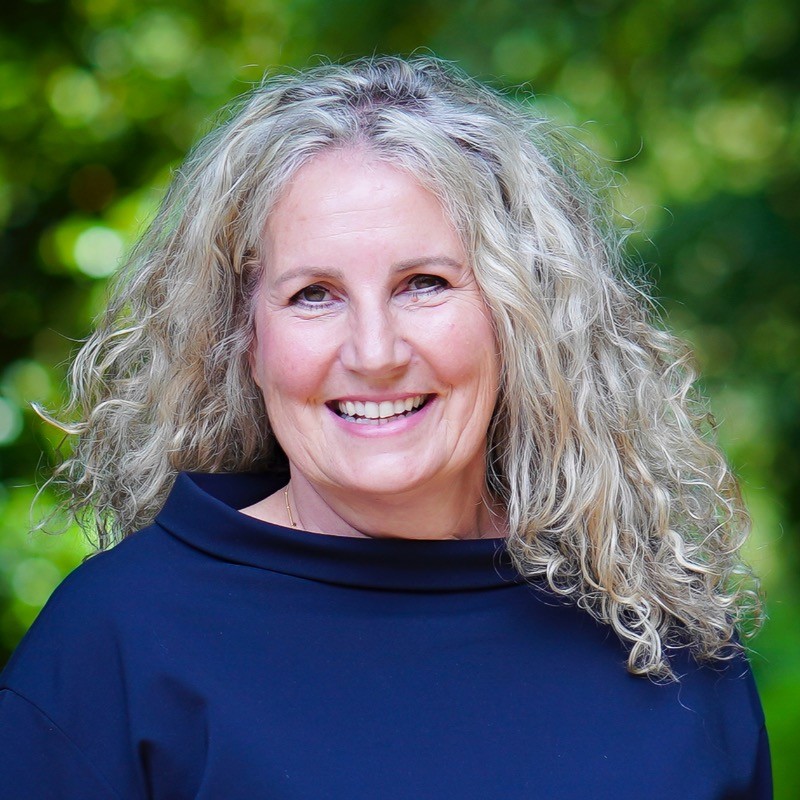 Chief People Officer | Driving Growth, Value and Transformation at Scale
Andrea Sanchez is a commercially focused Chief People Officer with over a decade of executive leadership experience across the Americas, EMEA and APAC, operating at Board and Executive Committee level within complex, multi-national organisations. She is known for translating people strategy into measurable business outcomes, particularly in periods of transformation, acquisition and accelerated growth.
Andrea has led people agendas for organisations of up to 36,000 employees across 50+ markets, with full P&L awareness, regional budget ownership and accountability for organisational design, leadership capability, workforce planning and culture. A trusted advisor to CEOs and Executive Teams, she partners closely with business leaders to enable growth, improve EBITDA and build scalable operating models.
Her track record includes leading the people integration of a $1bn acquisition spanning 17 countries and 20,000 employees, delivering cultural alignment and operational continuity through significant complexity. She has repeatedly demonstrated the ability to unlock value through data-led decision making, including spearheading a Workday HRIS transformation across EMEA and APAC, improving data integrity, standardising processes and generating clear commercial insights for leadership.
Andrea brings deep expertise in HR transformation, people analytics, M&A, engagement, D&I and leadership development, with a strong bias for execution. Her initiatives have delivered tangible results, including cost savings exceeding $400k through innovative workforce solutions, material improvements in engagement and retention, and demonstrable contribution to revenue growth and EBITDA improvement.
A Fellow of the CIPD, with an MA in HRM (Distinction) and Board Trustee experience, Andrea combines academic rigour with pragmatic, results-driven leadership. She is recognised for building high-performing cultures that balance performance, inclusion and accountability, creating organisations where people thrive and businesses outperform.